Power Banks Under the Microscope: Is the Global Air Cargo Industry Ready for the Growing Safety Challenge?
An IBATA Industry Investigation into Power Bank Air Transportation, Regulatory Compliance, Supply Chain Risks and Aviation Safety
Published by: International Battery Air Transport Association (IBATA)
November 2026
1. Introduction: A Small Device with a Global Aviation Safety Challenge
Power banks have become an essential consumer electronic product worldwide.
From smartphones and tablets to laptops, cameras and other portable electronic devices, demand for portable charging solutions continues to grow.
China remains a major global manufacturing and export base for power banks, supplying international markets through traditional retailers, online marketplaces, cross-border e-commerce platforms and global distribution networks.
However, behind this rapidly expanding market lies an increasingly important aviation safety concern.
A power bank is not simply an ordinary electronic accessory. It contains lithium-ion cells capable of experiencing thermal runaway under certain conditions.
When transported by air, an improperly manufactured, damaged, undeclared or incorrectly packaged power bank can present a serious fire risk.
The challenge is not necessarily the transportation of power banks themselves. Properly classified, tested, packaged and declared lithium batteries can be transported safely under established dangerous goods regulations.
The real concern is whether every participant in the global supply chain understands and consistently follows those requirements.
IBATA examines the issue from four perspectives:
- Aviation safety and lithium battery fire risks.
- Regulatory compliance and dangerous goods classification.
- Manufacturing quality and supply chain transparency.
- The responsibilities of shippers, freight forwarders, airlines and logistics providers.
2. Why Are Power Banks a Particular Concern?
Unlike lithium batteries installed inside electronic equipment, power banks are designed to store and release electrical energy independently.
This creates several specific risks.
2.1 High Energy Density
Modern power banks commonly contain lithium-ion or lithium-polymer battery cells
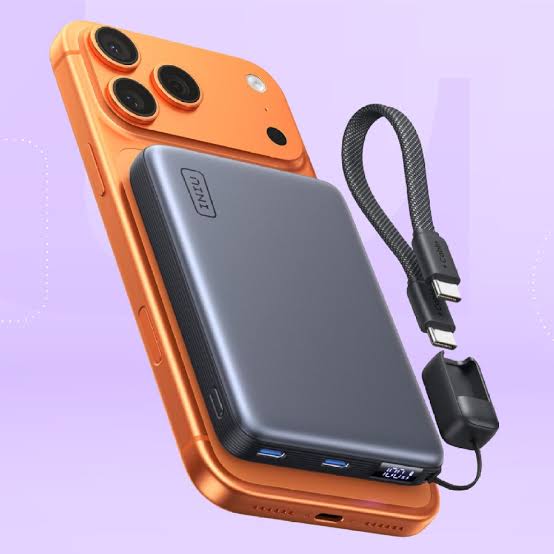
Typical commercial capacities include:
| Marketed Capacity | Approximate Energy at 3.7V |
|---|---|
| 5,000 mAh | 18.5 Wh |
| 10,000 mAh | 37 Wh |
| 20,000 mAh | 74 Wh |
| 30,000 mAh | 111 Wh |
| 40,000 mAh | 148 Wh |
The calculation is:
Watt-hours (Wh) = Ampere-hours (Ah) × Nominal Voltage (V)
For example, a 20,000 mAh power bank rated at 3.7V contains approximately 74 Wh.
This distinction is important because dangerous goods regulations classify lithium-ion batteries according to their watt-hour rating, not simply the advertised mAh capacity.
Furthermore, some products display misleading or confusing capacity information, making accurate identification and verification essential.
2.2 Thermal Runaway
Lithium-ion batteries can experience thermal runaway when internal damage, manufacturing defects, external pressure, short circuits or other failures trigger an uncontrolled chemical reaction.
Potential consequences include:
- Rapid temperature increases.
- Smoke and toxic gas emissions.
- Fire and possible explosion.
- Propagation to adjacent battery cells or packages.
Once thermal runaway begins, extinguishing and controlling a lithium battery fire can be particularly challenging in an aircraft environment.
2.3 Manufacturing Quality and Product Transparency
The global power bank market includes established international brands, OEM manufacturers, private-label suppliers and numerous smaller producers.
Not all products necessarily have the same manufacturing quality, battery-cell traceability or quality-control standards.
Potential concerns include:
- Inconsistent battery-cell quality.
- Inadequate internal protection circuits.
- Poor insulation and short-circuit protection.
- Incorrect battery capacity declarations.
- Incomplete UN 38.3 testing documentation.
- Inaccurate product labels and specifications.
A product’s commercial appearance or retail certification should never be treated as automatic proof that it meets all requirements for air transportation.
3. Aviation Incidents: The Warning Signs Are Already Here
Recent aviation incidents demonstrate that power bank safety is not merely a theoretical concern.
Case 1: Air Busan Aircraft Fire – South Korea, January 2025
A fire occurred aboard an Air Busan Airbus A321 while the aircraft was preparing for departure at Gimhae International Airport.
The aircraft was subsequently destroyed, and passengers and crew were evacuated.
The investigation identified a lithium-ion power bank in a passenger’s carry-on baggage as the likely source of the fire.
The incident highlighted the potentially catastrophic consequences of a lithium battery fire inside an aircraft cabin.
Case 2: Virgin Australia Boeing 737 – July 2025
On 21 July 2025, a passenger’s power bank experienced thermal runaway aboard a Virgin Australia Boeing 737-800 operating from Sydney to Hobart.
Smoke and flames were observed coming from an overhead baggage compartment.
The cabin crew and passengers responded to the fire, and the aircraft landed safely.
The Australian Transport Safety Bureau (ATSB) subsequently investigated the incident.
Case 3: Sydney Airport Cargo Hold Incident – February 2026
On 3 February 2026, a fire and smoke incident occurred during baggage loading involving an Airbus A350-900 at Sydney Airport.
The source was traced to a lithium-ion power bank attached to another personal electronic device.
The power bank and device were found damaged, and minor scorching was observed on the cargo compartment floor.
Importantly, investigators could not conclusively establish how the devices entered the aircraft cargo hold.
This incident raises an important question:
How can an undeclared lithium battery enter an aircraft cargo environment without being identified through the normal operational processes?
It also demonstrates that dangerous goods risks are not limited to properly declared cargo shipments.
4. What Does the FAA Investigation Tell Us About Power Bank Shipments?
One particularly important technical investigation was published by the US Federal Aviation Administration in October 2025.
The report was titled:
A State of Charge Analysis of Power Banks (38.5 Wh) Shipped by Air.
The investigation followed an incident in December 2024 involving an undeclared package containing three lithium-ion power banks.
The package had previously been transported by aircraft from Florida to Kentucky.
During transportation, the package experienced a thermal event, developed a visible burn hole and began emitting smoke.
The FAA subsequently examined five power banks obtained from packages offered by the same shipper.
The test results were particularly concerning:
All five power banks were found to have a State of Charge exceeding 90%.
This is significant because standalone lithium-ion batteries transported as UN3480 are subject to a maximum 30% State of Charge requirement under the applicable air cargo provisions, unless the required regulatory approvals are obtained.
The investigation demonstrates three important issues:
- Declared battery specifications and actual battery conditions may not always correspond.
- Undeclared shipments can bypass essential dangerous goods acceptance procedures.
- Verification of battery compliance must extend beyond simply checking shipping documents.
This is a particularly important warning for freight forwarders and airlines handling high volumes of consumer electronic products.
5. Regulatory Analysis: How Should Power Banks Be Transported by Air?
For conventional standalone lithium-ion power banks shipped as cargo, the relevant classification is generally:
UN3480 – Lithium Ion Batteries
The applicable packing instruction is:
IATA Packing Instruction PI965.
Under the applicable regulations, the following requirements are particularly important.
5.1 UN3480 Classification
Power banks shipped independently, rather than installed in or packed with the equipment they are intended to power, are generally classified as UN3480.
They must be handled as dangerous goods under the applicable provisions.
They should not be declared as ordinary electronic accessories simply because they are small consumer products.
5.2 Passenger Aircraft Restrictions
UN3480 lithium-ion batteries are forbidden for transportation as cargo on passenger aircraft under the standard provisions.
They are generally restricted to Cargo Aircraft Only transportation, subject to applicable regulatory approvals and requirements.
5.3 State of Charge (SoC)
Standalone UN3480 lithium-ion batteries must generally be offered for transportation at a State of Charge not exceeding 30% of their rated capacity.
Shipments exceeding this limit require the applicable approvals from the relevant authorities.
This requirement is a critical safety measure designed to reduce the potential severity of thermal runaway.
5.4 Packaging and Protection
Packaging must comply with the relevant provisions of PI965.
Depending on the battery specification and applicable packing section, requirements include:
- Appropriate and compliant outer packaging.
- Protection against short circuits.
- Prevention of battery movement and damage.
- Protection against accidental activation or electrical contact.
- Applicable package performance requirements.
5.5 Marking, Labelling and Documentation
Depending on the applicable packing section, shipment preparation and regulatory requirements, the following may be required:
- UN3480 identification.
- Class 9 lithium battery hazard label.
- Cargo Aircraft Only label.
- Lithium battery mark, where applicable.
- Shipper’s Declaration for Dangerous Goods.
- Appropriate air waybill information.
- Supporting battery testing and compliance documentation.
5.6 UN 38.3 Testing
Lithium-ion battery designs must meet the applicable requirements of Section 38.3 of the UN Manual of Tests and Criteria.
The corresponding test summary must be made available as required.
A Material Safety Data Sheet (MSDS/SDS) may also be requested by airlines or logistics providers, but it does not replace UN 38.3 testing evidence or dangerous goods shipping documentation.
Important: The precise requirements depend on the battery specification, watt-hour rating, packing section, applicable DGR edition, State Variations and airline Operator Variations.
6. The Passenger Rules and Cargo Rules Must Not Be Confused
Another important issue is the distinction between power banks carried by passengers and power banks shipped as commercial cargo.
On 27 March 2026, ICAO introduced additional restrictions for power banks carried by passengers.
The new provisions include:
- A maximum of two power banks per passenger.
- Power banks must not be recharged during the flight.
- Passengers are advised not to use power banks to recharge portable electronic devices during the flight.
These provisions were introduced to address increasing concerns about lithium battery fires in aircraft cabins.
However, these passenger restrictions must not be confused with commercial air cargo requirements.
A power bank carried by a passenger and a shipment of thousands of power banks offered by a manufacturer are two different transportation scenarios.
Passenger baggage compliance does not establish cargo shipment compliance.
The commercial transportation of power banks must continue to follow the applicable dangerous goods regulations.
7. Where Are the Biggest Risks in the Global Power Bank Supply Chain?
IBATA believes that the most significant challenge is not simply the existence of regulations, but the consistency of their implementation throughout the supply chain.
Risk 1: Misdeclaration by Shippers
Some manufacturers, trading companies and e-commerce sellers may not fully understand the dangerous goods classification of their products.
Power banks may be declared as:
- Electronic accessories.
- Mobile phone accessories.
- Consumer electronics.
- General merchandise.
Such descriptions may conceal the presence of standalone lithium-ion batteries.
Incorrect declarations can prevent airlines and freight forwarders from applying the appropriate dangerous goods procedures.
Risk 2: Inadequate Supplier Verification
Freight forwarders often receive shipping instructions from trading companies rather than directly from manufacturers.
The actual factory, battery-cell supplier and product specifications may not always be transparent.
This creates difficulties in verifying:
- Battery chemistry.
- Rated capacity.
- UN 38.3 test status.
- Manufacturing origin.
- Product consistency.
- Actual State of Charge.
Risk 3: E-commerce and Cross-Border Distribution
The rapid expansion of cross-border e-commerce has significantly increased the number of small parcels containing lithium battery products.
Multiple sellers, consolidation warehouses, parcel operators and logistics providers may participate in a single shipment.
The more fragmented the supply chain becomes, the more difficult it can be to identify the original shipper and verify the contents of every package.
Risk 4: Inconsistent Operational Knowledge
Not every logistics operator has the same level of dangerous goods expertise.
Some agents may understand general lithium battery requirements but lack practical experience in:
- PI965 classification.
- SoC verification.
- Packaging inspection.
- Document validation.
- Airline-specific acceptance requirements.
This creates a gap between regulatory requirements and actual operational performance.
Risk 5: Airline Acceptance and Screening Limitations
Security screening is an important part of cargo security, but it cannot independently guarantee that all undeclared dangerous goods will be identified.
IATA has also highlighted the need for a risk-based, multilayered approach to dangerous goods safety, beginning as early as possible in the supply chain.
The responsibility for safety cannot be transferred entirely to the airline or airport screening process.
8. What Should Different Industry Participants Do?
A sustainable solution requires cooperation across the entire battery air freight ecosystem.
| Industry Participant | Recommended Actions |
|---|---|
| Manufacturers | Maintain accurate battery specifications, UN 38.3 documentation and production quality control. |
| Shippers | Correctly classify, declare, package and prepare all power bank shipments. |
| Freight Forwarders | Verify shipper information, product classification and dangerous goods documentation before booking. |
| Airlines | Maintain effective acceptance procedures, staff training and operational controls. |
| Ground Handlers | Ensure proper handling, loading inspections and immediate reporting of suspicious items. |
| E-commerce Platforms | Improve seller verification, product declarations and dangerous goods compliance controls. |
| Testing Laboratories | Provide reliable testing services and traceable compliance documentation. |
| Industry Associations | Promote consistent standards, professional education and cooperation across the supply chain. |
9. IBATA’s Position: Safety Must Begin at the Source
IBATA believes that improving lithium battery air transportation safety requires more than stricter airline acceptance procedures.
The industry must move towards a more transparent and accountable supply chain.
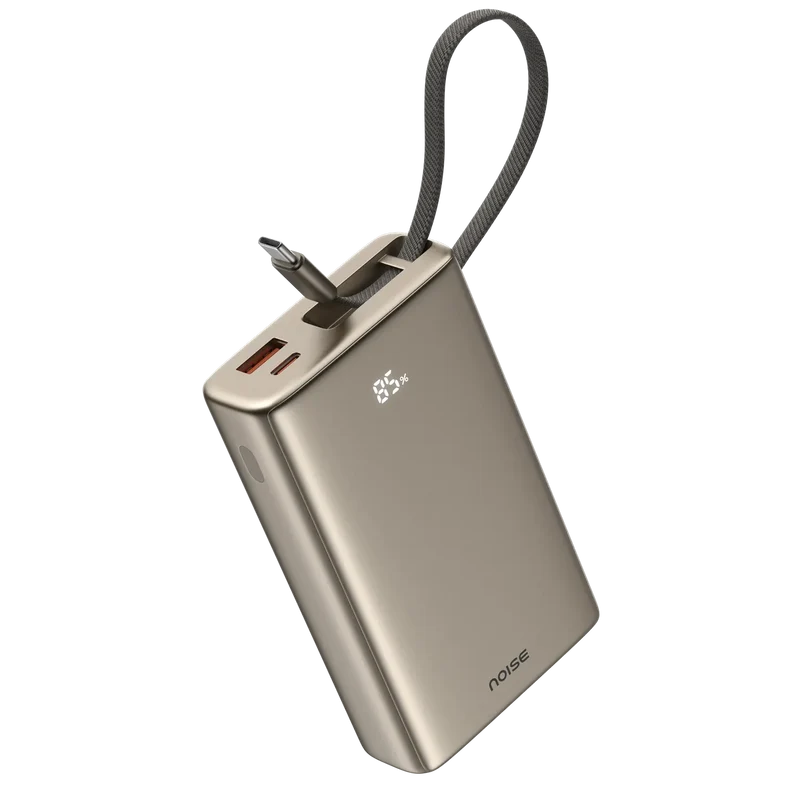
The starting point should be the manufacturer.
A properly manufactured and tested power bank, supported by accurate technical documentation, should be identifiable throughout its transportation journey.
IBATA proposes several priorities:
1. Manufacturer Verification
Promote the identification and verification of battery manufacturers and their product compliance capabilities.
2. Standardized Compliance Awareness
Improve understanding of UN3480, PI965, UN 38.3, State of Charge requirements, packaging and documentation.
3. Professional Training
Encourage practical dangerous goods training for manufacturers, shippers, freight forwarders and logistics operators.
4. Supply Chain Transparency
Promote more reliable communication between manufacturers, shipping agents, airlines and logistics providers.
5. Industry Information Sharing
Encourage the sharing of safety alerts, regulatory developments, operational experiences and lessons learned from incidents.
6. Recognition of Qualified Industry Participants
Develop a framework to identify organizations demonstrating a commitment to battery transportation safety, professional standards and compliance.
IBATA’s objective is not to replace ICAO, IATA, national aviation authorities or existing dangerous goods regulations.
Our objective is to support the industry through education, cooperation, information sharing and the promotion of better operational standards.
10. Conclusion: The Industry Cannot Afford to Treat Power Banks as Ordinary Cargo
Power banks are small products, but the aviation safety risks associated with them should never be underestimated.
The growth of global battery manufacturing, cross-border e-commerce and international air transportation has created a more complex logistics environment.
Recent aviation incidents and technical investigations demonstrate that the risks are real.
The challenge is no longer simply whether regulations exist.
The more important question is whether every participant in the supply chain understands, implements and takes responsibility for those regulations.
Aviation safety is a shared responsibility.
Manufacturers must produce compliant products.
Shippers must declare them correctly.
Freight forwarders must verify shipments.
Airlines must maintain effective acceptance procedures.
And the wider logistics industry must work together to prevent undeclared and non-compliant lithium batteries from entering the aviation system.
A safe battery supply chain begins long before a shipment reaches the airport.
IBATA – International Battery Air Transport Association
Promoting Safety. Supporting Compliance. Connecting the Global Battery Air Freight Industry.
We invite battery manufacturers, airlines, freight forwarders, airports, logistics providers, testing laboratories and dangerous goods professionals to work together towards a safer and more transparent global battery air transportation ecosystem.
Safety is not an individual responsibility. It is an industry-wide commitment.