
Lithium batteries have become an essential part of modern global trade. From electric vehicles and drones to smartphones, laptops, energy storage systems and industrial equipment, batteries are increasingly transported by air.
However, shipping lithium batteries by air is not simply a matter of choosing the right box and completing a declaration. The shipment must comply with specific Packing Instructions (PI) established under the dangerous goods air transport framework.
For freight forwarders, shippers, manufacturers and airlines, understanding the applicable Packing Instruction is one of the most important steps in determining whether a battery shipment can be safely and legally accepted for air transportation.
What Are Packing Instructions (PI)?
A Packing Instruction (PI) is a set of requirements that defines how a particular dangerous goods shipment must be prepared and packaged for air transport.
Depending on the battery type, configuration, quantity, watt-hour rating, lithium content, equipment status and transport conditions, different Packing Instructions may apply.
The PI determines important requirements such as:
- Type of packaging
- Inner and outer packaging requirements
- Quantity limitations
- Battery protection requirements
- Short-circuit prevention
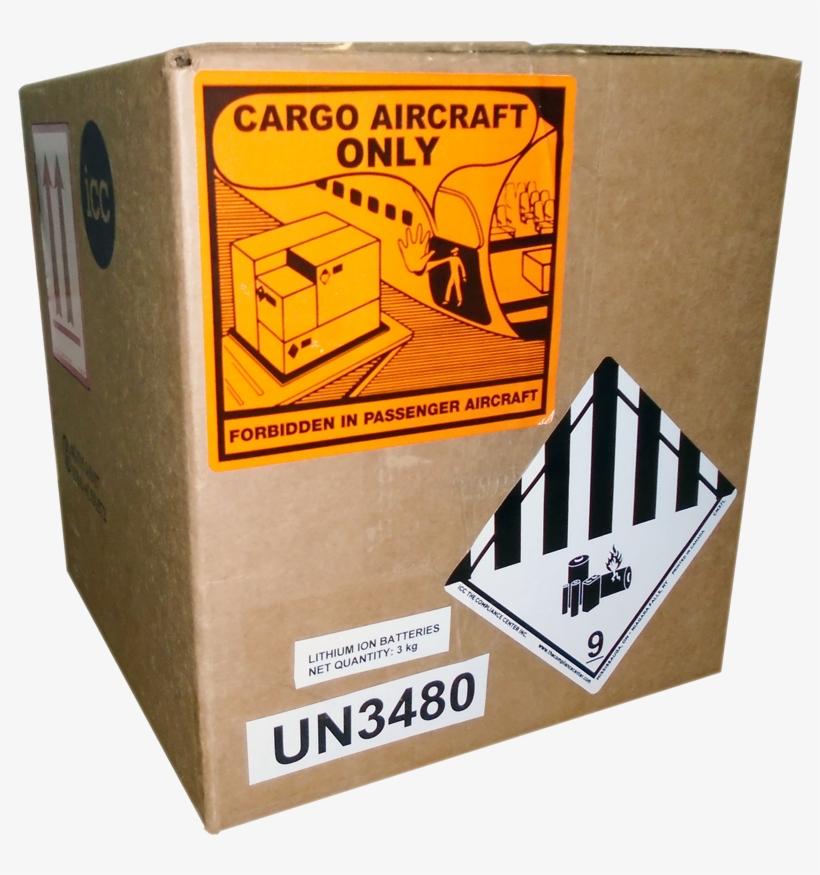
- Marking and labeling
- Documentation
- Additional handling requirements
In other words:
The Packing Instruction is the roadmap for preparing a battery shipment for air transport.
Choosing the wrong PI can result in incorrect packaging, documentation errors, airline rejection or regulatory non-compliance.
PI965–PI980: Why Do They Matter?
The Packing Instructions covering lithium batteries are commonly associated with different battery classifications and shipment configurations.
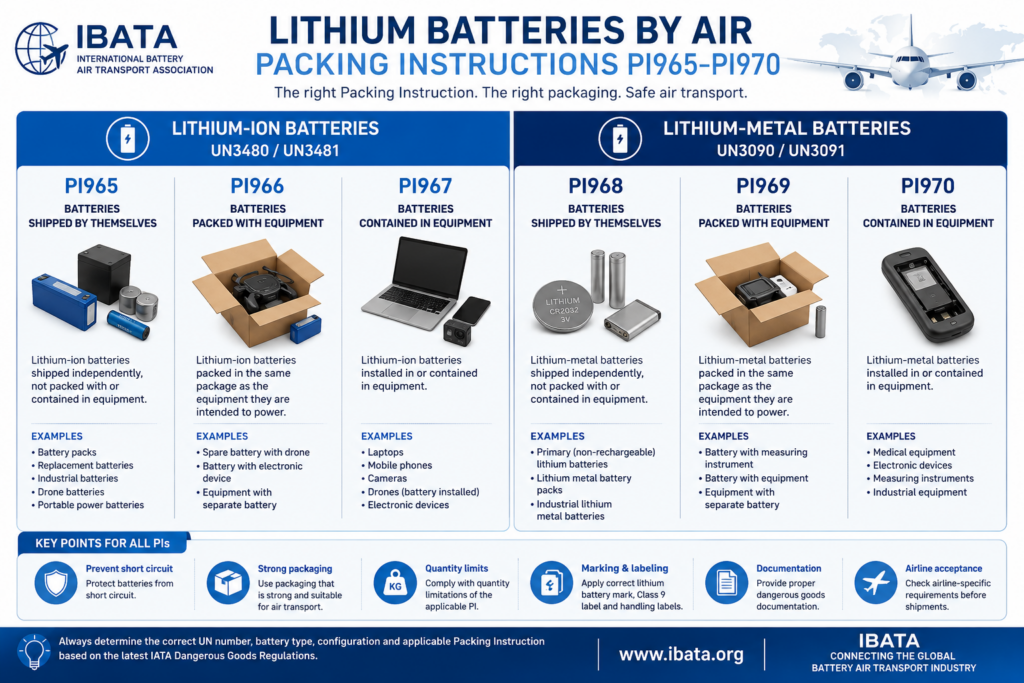
A simplified overview is shown below:
| Packing Instruction | Typical Application |
|---|---|
| PI965 | Lithium-ion batteries shipped by themselves |
| PI966 | Lithium-ion batteries packed with equipment |
| PI967 | Lithium-ion batteries contained in equipment |
| PI968 | Lithium-metal batteries shipped by themselves |
| PI969 | Lithium-metal batteries packed with equipment |
| PI970 | Lithium-metal batteries contained in equipment |
| PI971–PI980 | Other battery-related dangerous goods / specific configurations and substances |
The exact applicable instruction must always be determined from the UN number, proper shipping name, battery chemistry, configuration and applicable edition of the regulations.
The table above is therefore intended as a high-level introduction rather than a substitute for the applicable dangerous goods regulations.
PI965 – Lithium-Ion Batteries Shipped by Themselves
PI965 is one of the most important Packing Instructions for the air transportation of lithium-ion batteries.
It generally applies to:
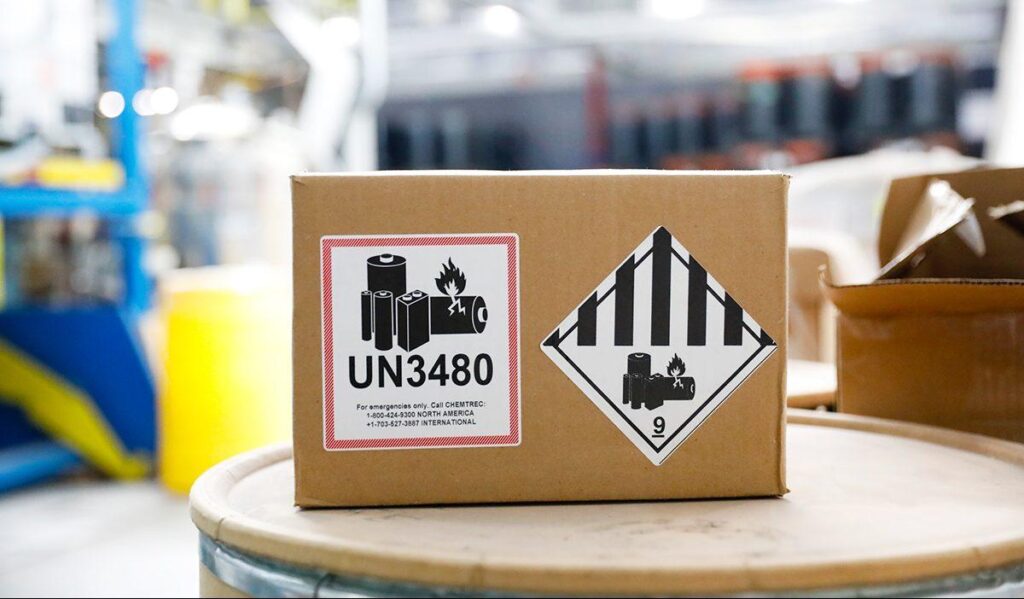
UN3480 – Lithium ion batteries
These are batteries shipped independently rather than packed with or contained in equipment.
Examples include:
- Standalone battery packs
- Replacement batteries
- Industrial battery modules
- Drone batteries
- Portable power station batteries
- Battery packs for electronic devices
Because the batteries are not protected by equipment, packaging and handling requirements are particularly important.
The shipment may require specific controls concerning:
- State of charge
- Packaging
- Short-circuit protection
- Quantity
- Marking and labeling
- Cargo aircraft restrictions
- Dangerous goods documentation
For this reason, PI965 shipments require careful compliance review before booking with an airline.
PI966 – Lithium-Ion Batteries Packed With Equipment
PI966 generally applies when lithium-ion batteries are packed in the same package as the equipment they are intended to power, but the batteries are not installed in the equipment.
Examples include:
- Battery packed with a drone
- Spare battery packed with an electronic device
- Industrial equipment shipped together with a separate battery
The packaging must prevent movement and protect both the battery and equipment during transportation.
A key point is that:
“Packed with equipment” does not mean “contained in equipment.”
This distinction is important when determining the correct Packing Instruction.
PI967 – Lithium-Ion Batteries Contained in Equipment
PI967 generally applies when lithium-ion batteries are installed in or contained in the equipment.
Examples include:
- Laptops
- Mobile phones
- Cameras
- Tablets
- Electronic devices
- Drones with installed batteries
- Battery-powered industrial equipment
Because the battery is contained within the equipment, the packaging and handling requirements differ from standalone batteries.
However, the presence of equipment does not automatically make a shipment non-dangerous.
The shipper must still determine:
- Battery chemistry
- UN classification
- Watt-hour rating
- Battery configuration
- Applicable PI
- Applicable packaging and labeling requirements
- Airline acceptance requirements
PI968 – Lithium-Metal Batteries Shipped by Themselves
PI968 generally applies to:
UN3090 – Lithium metal batteries
These batteries are shipped independently rather than packed with or contained in equipment.
Lithium-metal batteries can present significant transportation risks, particularly because of their energy characteristics and potential fire hazard.
Therefore, shippers should pay particular attention to:
- Lithium metal content
- Packaging
- Short-circuit prevention
- Quantity limits
- Marking and labeling
- Documentation
- Aircraft restrictions
PI969 – Lithium-Metal Batteries Packed With Equipment
PI969 generally applies to lithium-metal batteries packed together with the equipment they power.
For example:
A piece of electronic equipment is shipped together with a separate lithium-metal battery in the same outer package.
The battery must be adequately protected against:
- Physical damage
- Movement inside the package
- Accidental activation
- Short circuit
The package must also satisfy the applicable requirements of the relevant Packing Instruction.
PI970 – Lithium-Metal Batteries Contained in Equipment
PI970 generally applies to lithium-metal batteries contained in or installed in equipment.
Examples may include certain:
- Electronic devices
- Measuring instruments
- Medical equipment
- Industrial equipment
Again, the key distinction is:
Contained in equipment ≠ packed with equipment ≠ shipped by itself.
Understanding this difference is essential for determining the correct PI.
What About PI971–PI980?
PI971–PI980 cover additional dangerous goods and battery-related configurations.
They should not be treated simply as a continuation of the lithium-ion/lithium-metal sequence.
The applicable Packing Instruction depends on the specific dangerous goods classification, UN number, proper shipping name and transport configuration.
This is one reason battery air transport compliance should always begin with classification, rather than simply selecting a PI based on the appearance of the product.
The 5 Questions Every Battery Shipper Should Ask
Before shipping a battery by air, ask these five questions:
1. What type of battery is it?
Lithium-ion?
Lithium-metal?
Another battery technology?
2. What is the UN number?
For example:
UN3480
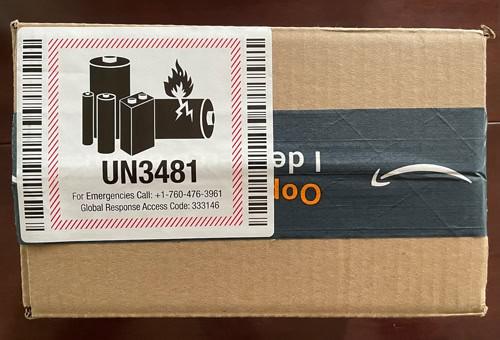
UN3481
UN3090
UN3091
3. How is the battery shipped?
Is it:
Shipped by itself?
Packed with equipment?
Contained in equipment?
4. Which Packing Instruction applies?
The correct PI should be determined from the applicable dangerous goods regulations.
5. Can the airline accept the shipment?
Regulatory compliance does not necessarily guarantee airline acceptance.
Airlines may impose additional operational requirements, restrictions, embargoes or documentation requirements.
Packaging Is More Than “Putting the Battery in a Box”
One of the biggest misconceptions in battery transportation is that compliant packaging simply means using a strong carton.
In reality, battery packaging can involve multiple layers of protection.
Depending on the applicable requirements, the shipper may need to consider:
Battery protection
↓
Inner packaging
↓
Protection against movement
↓
Short-circuit prevention
↓
Outer packaging
↓
Marking & labeling
↓
Documentation
↓
Airline acceptance
The objective is to prevent the battery from becoming a source of danger during handling, loading and transportation.
Why Forwarders Need to Understand PI
Freight forwarders are often the first point of contact between battery manufacturers and airlines.
A forwarder may receive a shipment described simply as:
“Battery”
That description is not sufficient.
A professional forwarder should obtain the information necessary to determine:
- Battery type
- UN number
- Watt-hour rating or lithium content
- Number of cells/batteries
- Battery configuration
- State of charge where applicable
- Test documentation where required
- Packaging configuration
- Applicable PI
- Required labels and documentation
- Airline acceptance conditions
The ability to identify these factors can significantly reduce shipment delays and rejection risks.
The Future of Battery Air Transport
Global demand for battery-powered products continues to grow.
Electric mobility, drones, robotics, renewable energy storage and portable electronics are creating new demand for international battery transportation.
As the battery industry grows, the air cargo industry faces a parallel challenge:
How can we move batteries faster while maintaining the highest level of safety and compliance?
The answer requires cooperation across the entire supply chain.
Manufacturers, shippers, freight forwarders, airlines, airports, packaging companies, testing laboratories and compliance organizations all have a role to play.
IBATA: Connecting the Battery Air Transport Industry
The International Battery Air Transport Association (IBATA) is focused on building a global industry platform dedicated to:
- Battery air transport
- Safety and compliance
- Industry knowledge
- Packaging
- Training
- Regulatory information
- Airline and forwarder cooperation
- Battery manufacturer cooperation
- Industry data and market intelligence
Our goal is simple:
Make battery air transport safer, more transparent and more efficient.
As battery transportation becomes increasingly important to global supply chains, understanding Packing Instructions is no longer only a compliance issue.
It is becoming an essential professional skill for everyone involved in battery logistics.
Final Reminder
Packing Instructions such as PI965–PI980 should never be selected based solely on a product name or a simple battery description.
The correct requirements depend on the applicable dangerous goods regulations, classification, battery characteristics, configuration and transport conditions.
Always verify the current applicable regulatory requirements and airline acceptance conditions before shipping.
Safe battery transportation starts with correct classification — and the correct Packing Instruction.
Learn More
IBATA – International Battery Air Transport Association